A walk-in shower is a layout decision
Walk-in glass is not one standard product. The right configuration depends on the shower depth, curb or wet-room floor, shower head direction, entry width, and how much splash the room can tolerate. A fixed panel can feel open and simple, while a door or full enclosure gives more control in a tighter bathroom.
The most useful starting point is the finished opening. Rough measurements are helpful for planning, but tempered glass should be ordered only after tile, stone, and waterproofing are complete and a professional has verified the dimensions.
Fixed panel: the cleanest visual line
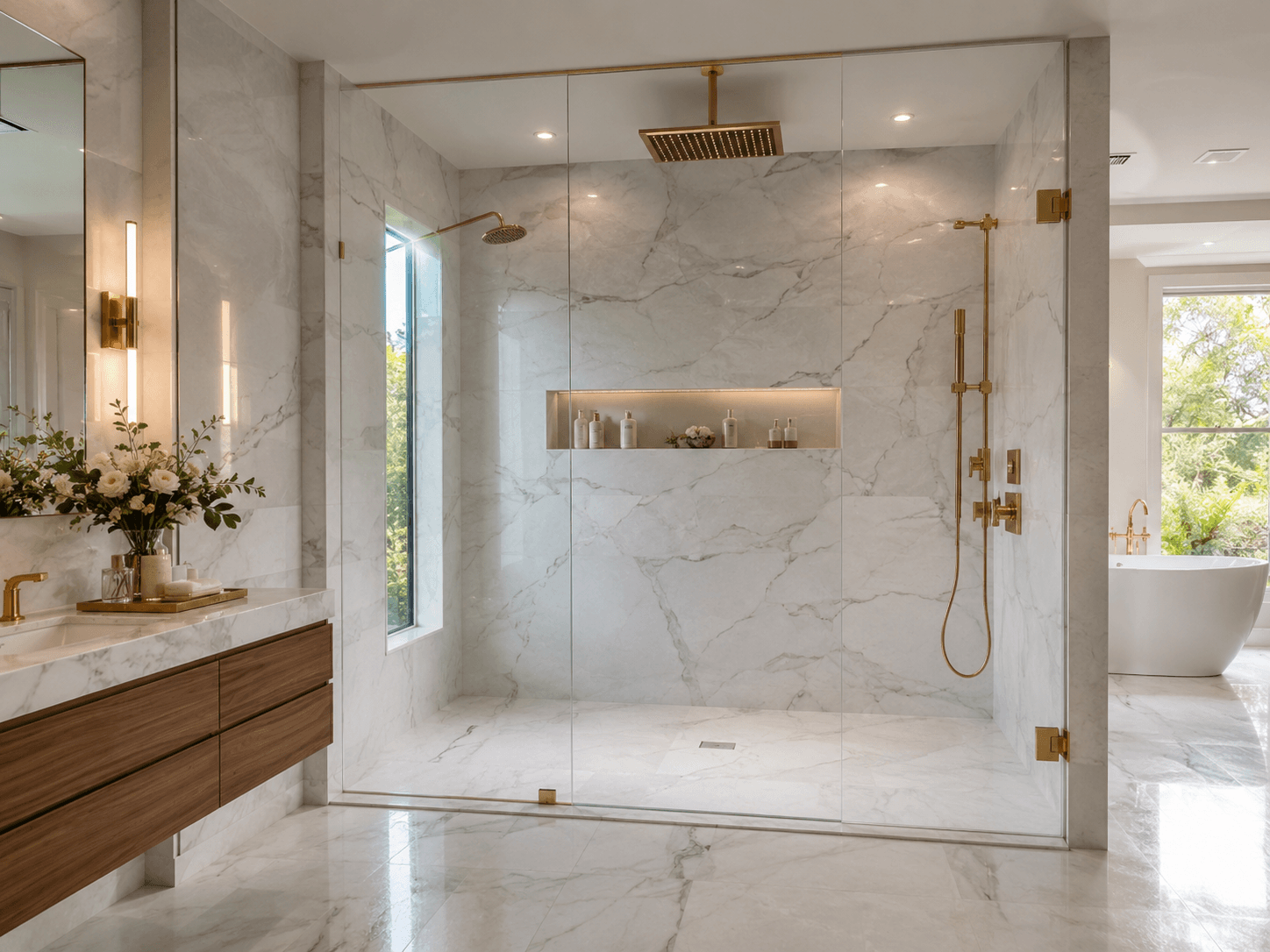
A fixed panel works well when the shower is deep enough and the spray is directed away from the opening. It uses fewer moving parts, keeps the room visually open, and can be a good fit over a tub or beside a rain head.
- Best for: open-plan showers, tub splash guards, and generous entries
- Watch for: direct spray, short shower depth, and exposed bathroom flooring
Panel plus door: more control without closing the room
Adding a hinged door improves water control while preserving the open look of a walk-in design. It also lets the installer plan a more predictable entry path around a bench, return wall, or narrow bathroom.
- Best for: medium-size showers that need a defined entry
- Watch for: door swing, hinge support, handle clearance, and curb slope
Full enclosure: the answer for complex openings
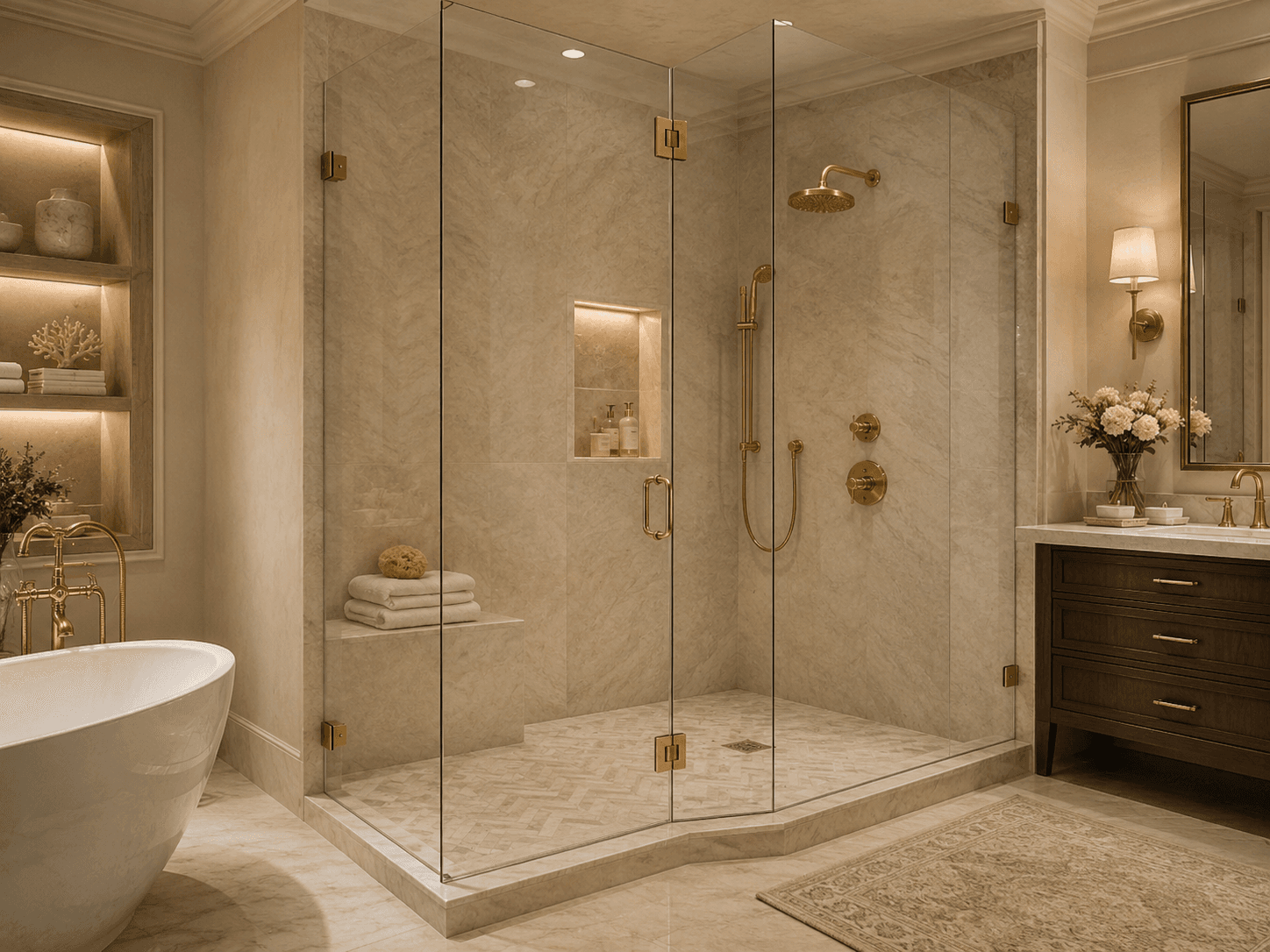
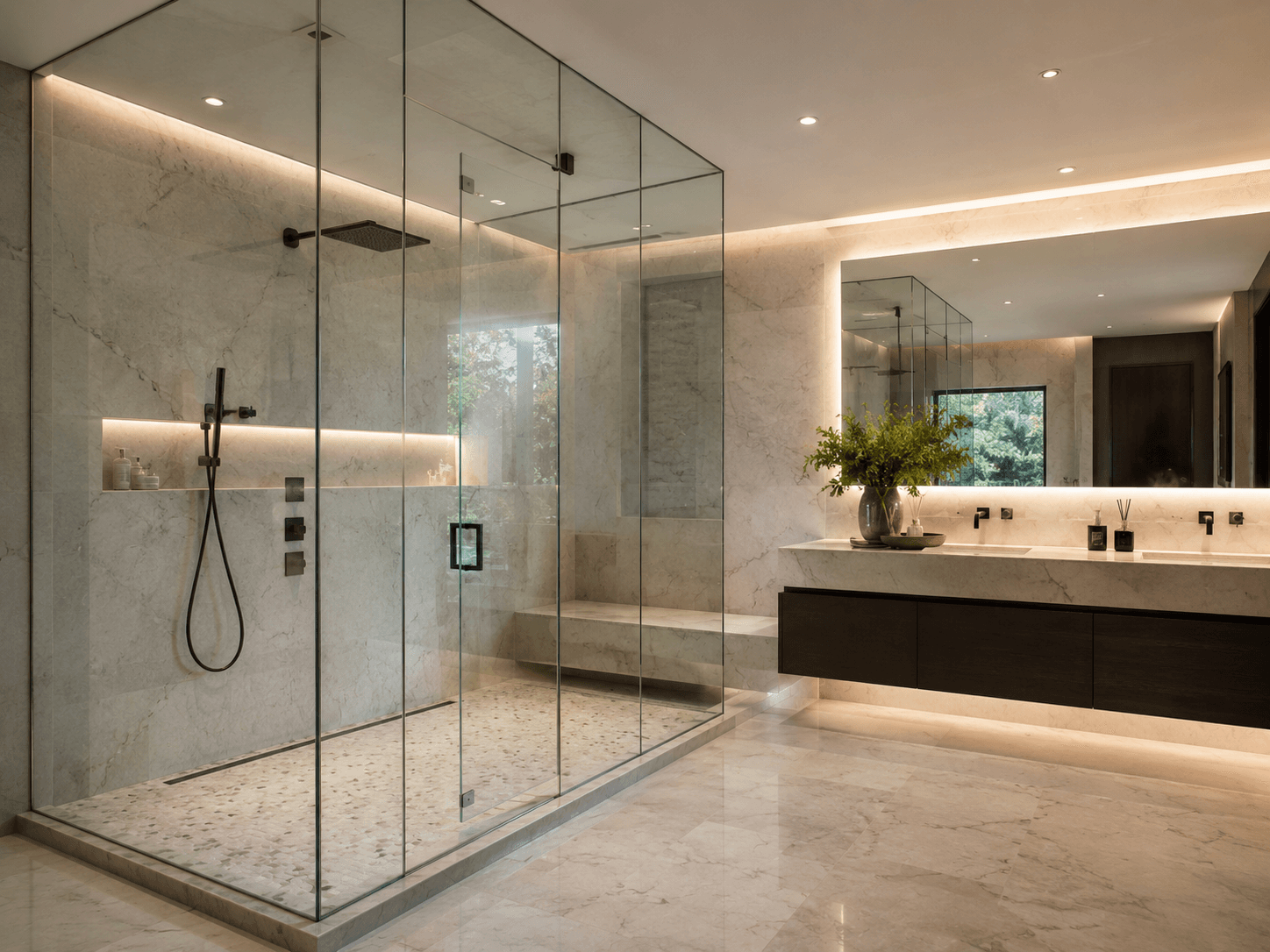
A full enclosure uses multiple panels, returns, or ceiling-height glass to contain water and define the room. It costs more because it requires more glass, hardware, measurement precision, and installation time, but it can make an unusual corner, steam shower, or oversized opening work beautifully.
Questions to answer before requesting a quote
Share a photo of the full bathroom, the shower head, curb or tub deck, entry, bench, and ceiling. Then describe whether your priority is openness, splash control, privacy, accessibility, steam, or the simplest installation. Those details help a provider recommend a layout instead of quoting a generic panel.