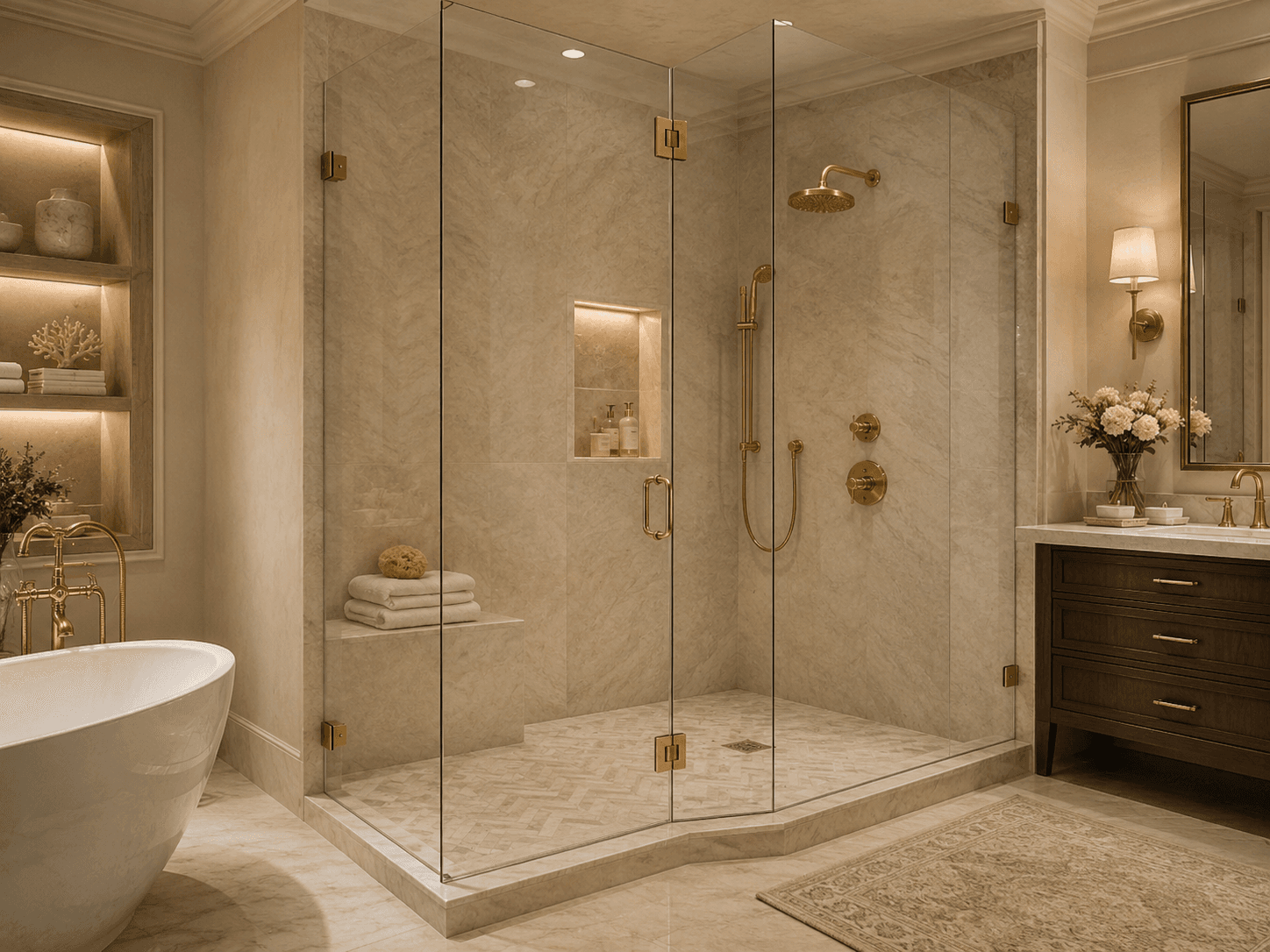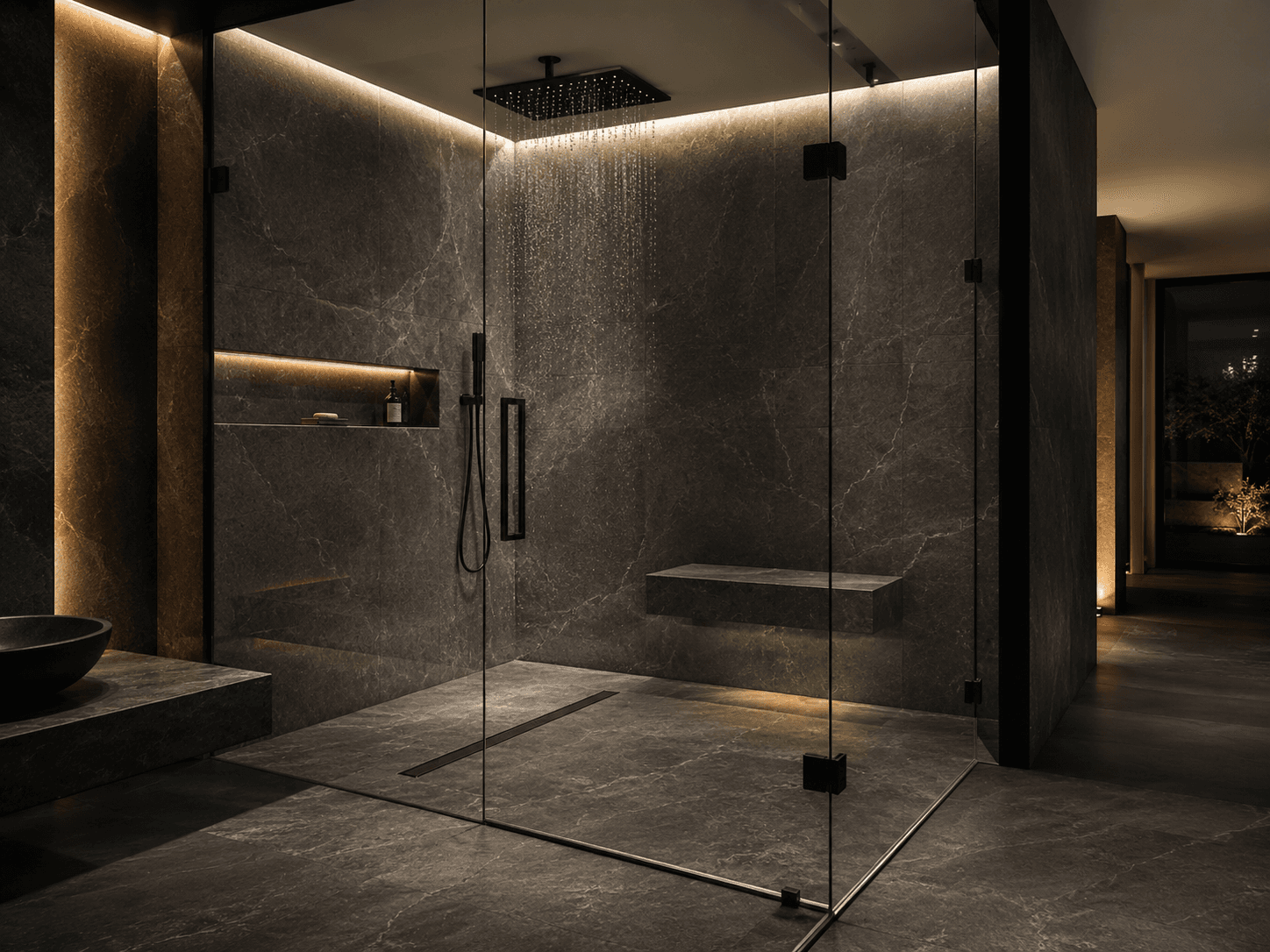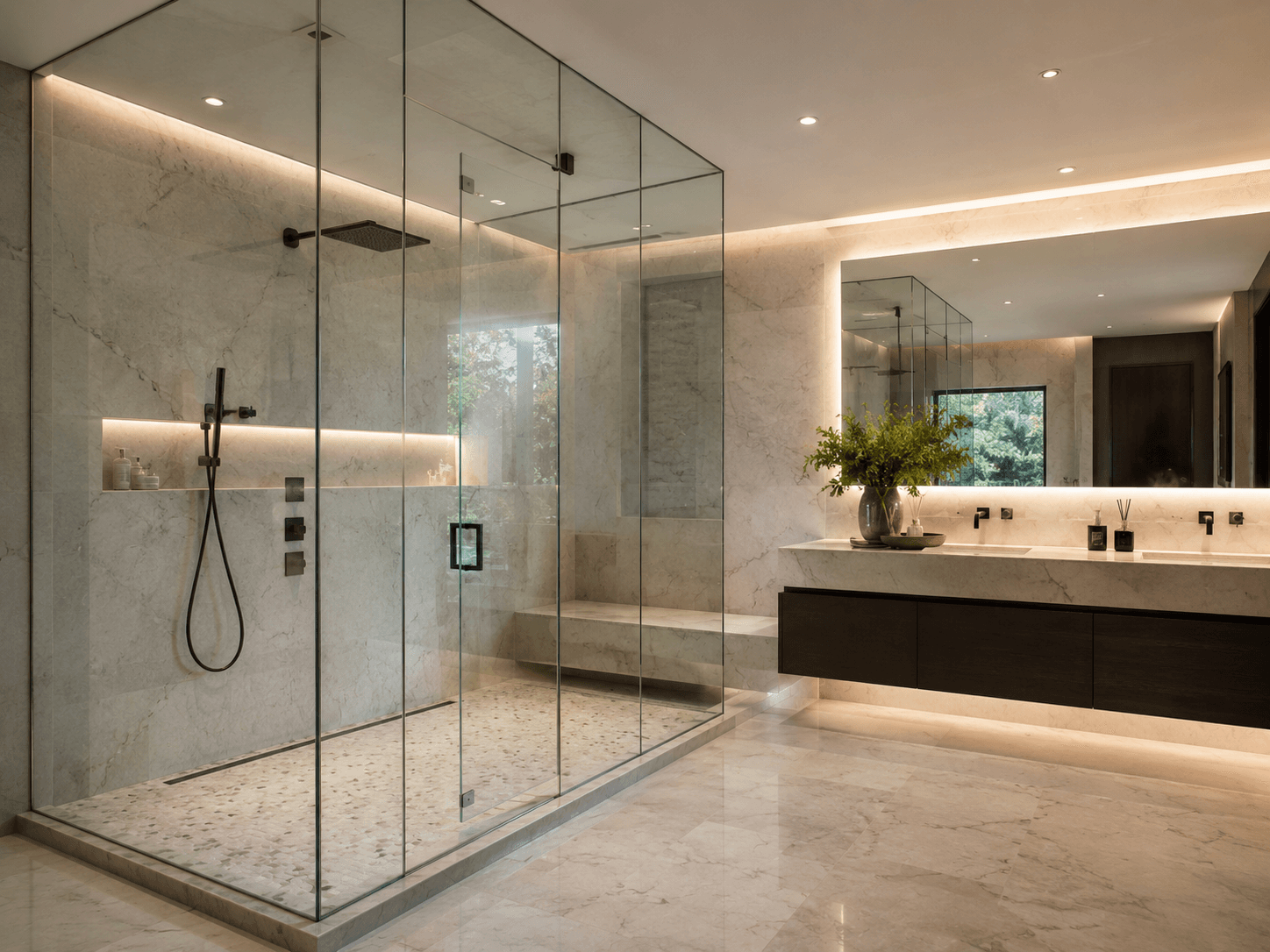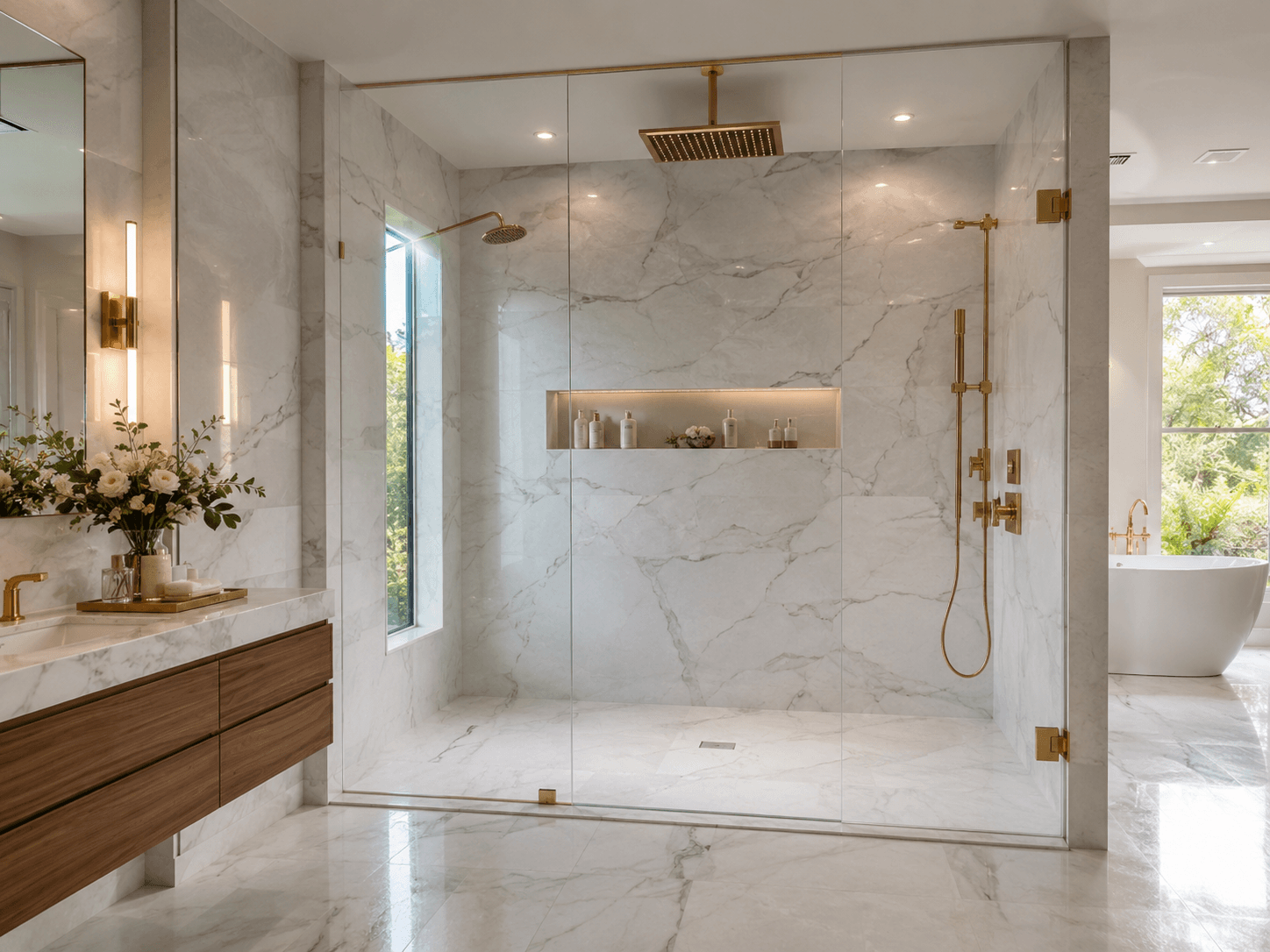
What “frameless” really means
A frameless shower uses thicker tempered glass with hinges, clamps, and minimal channels rather than a full metal frame around every panel. The result is a lighter sightline and a more custom feel, but the design depends on accurate measurement and solid support behind the finished wall.
Why semi-frameless can be the practical middle ground
Semi-frameless systems keep the door visually open but use channels or limited framing where extra support and water control are useful. That can make them more forgiving in standard openings and less expensive than a fully frameless custom layout.
- Frameless: cleaner sightlines, heavier glass, more precise hardware planning
- Semi-frameless: more support and flexibility, often lower material and installation cost
- Framed: strongest enclosure effect and usually the lowest starting price
The price drivers are more specific than the label
Glass thickness is only one factor. Door width, fixed-panel size, corner returns, hinge finish, low-iron clarity, protective coating, tile drilling, wall blocking, and installation access can move the quote more than the word “frameless” alone.
Maintenance and daily use
Frameless systems have fewer tracks and channels to collect mineral buildup, but every glass edge and hinge still needs regular care. A squeegee after each shower, a non-abrasive cleaner, and prompt attention to loose hardware help protect the glass and finishes.
How to choose
Choose the system that fits the opening and the way the room is used. If the bathroom has a difficult angle, a wide unsupported panel, or a high-splash entry, the best design may include a return, channel, or semi-frameless element even when the goal is a minimal look.