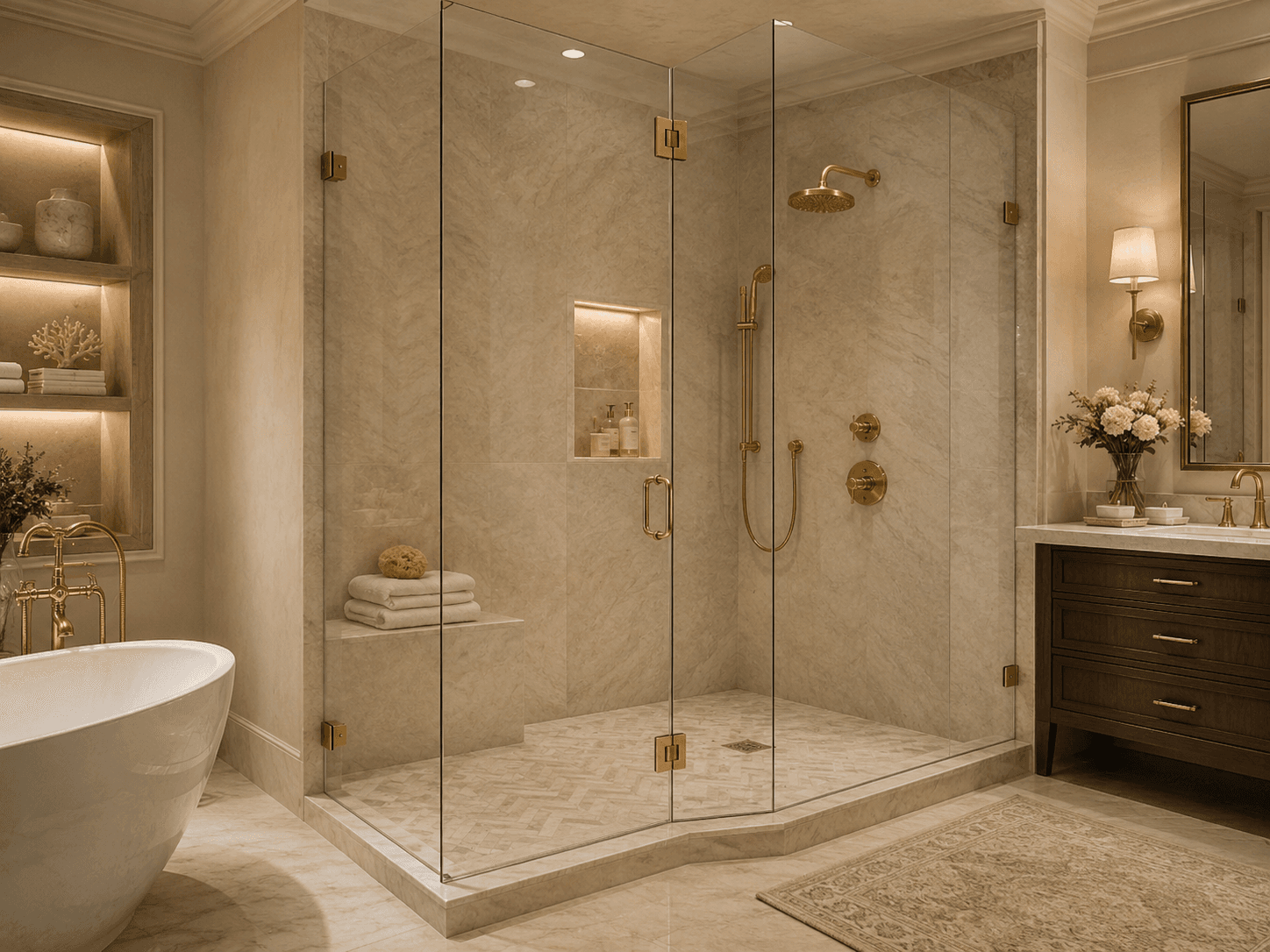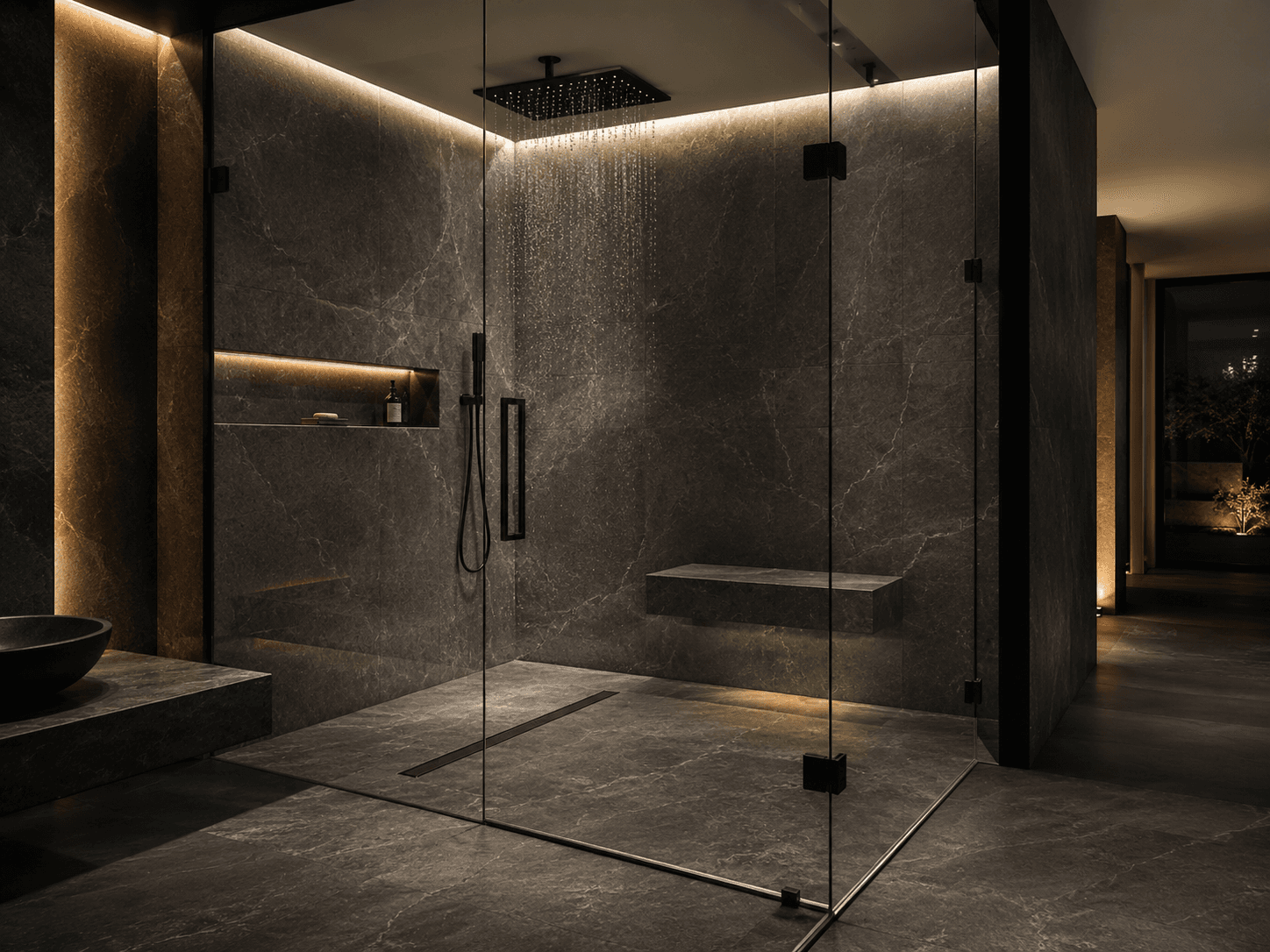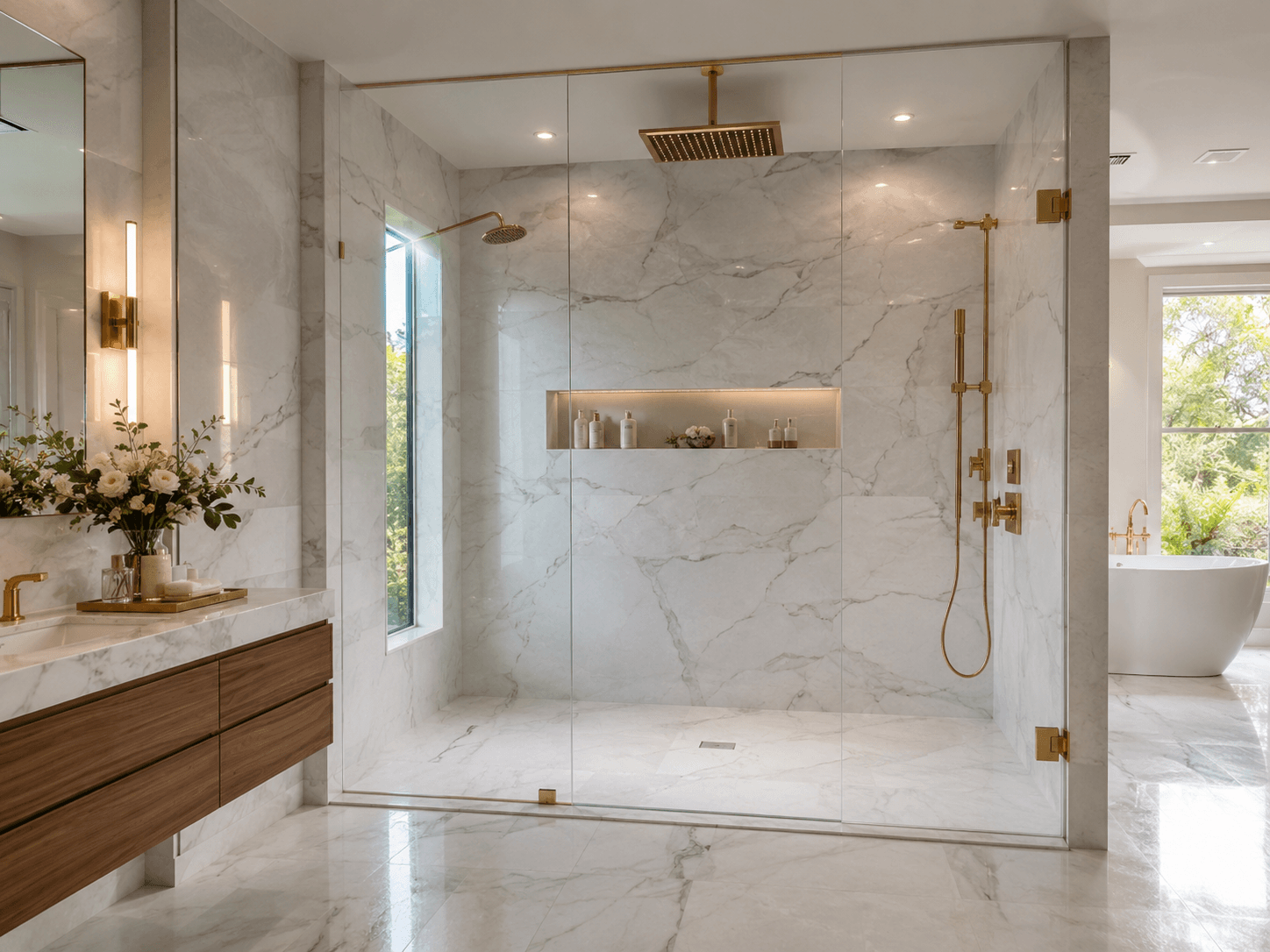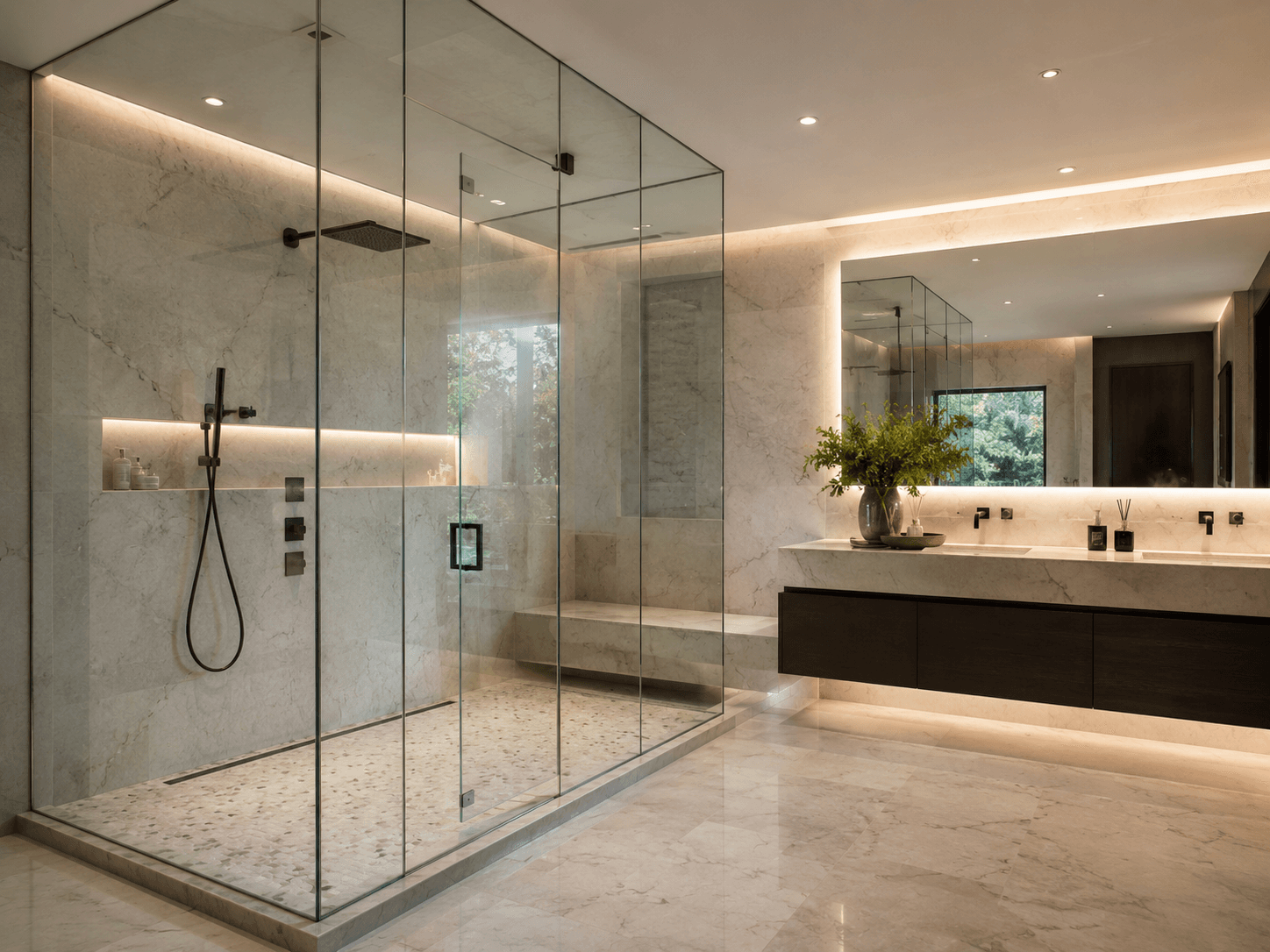
Rough measurements are for planning
You do not need perfect measurements to start a quote request. A rough width, height, and photo help a provider understand the project category. The final glass order should be based on a field measurement after tile, stone, curb, and wall finishes are complete.
The five measurements that help first
Measure the opening width at the bottom, middle, and top if you can do so safely. Record the approximate finished height, curb or tub-deck depth, and the distance from the shower head to the entry. If there is a bench, return wall, or unusual angle, measure or photograph that as well.
- Opening width at bottom, middle, and top
- Finished height from curb or tub deck
- Curb or tub-deck depth
- Shower-head location and spray direction
- Bench, return, niche, or angled-wall dimensions
Photographs are often more useful than a single number
Take one wide photo of the entire bathroom, one straight-on photo of the opening, and close-ups of the curb, tile, ceiling, hinges, and any existing frame. Include a photo with the shower door open if swing clearance is part of the project.
What the installer verifies on site
The professional checks whether walls are plumb, whether the curb slopes correctly, where blocking or studs are available, how the glass will be carried into the room, and how the door will swing without hitting fixtures. Those details control the final panel shapes, hardware, and safety clearances.
Do not order tempered glass from rough measurements
Tempered glass cannot be cut or drilled after it is made. A small measurement error can affect the door swing, hinge placement, seals, and water control. Use rough dimensions to get a planning range, then let the installer verify the finished opening before fabrication.